
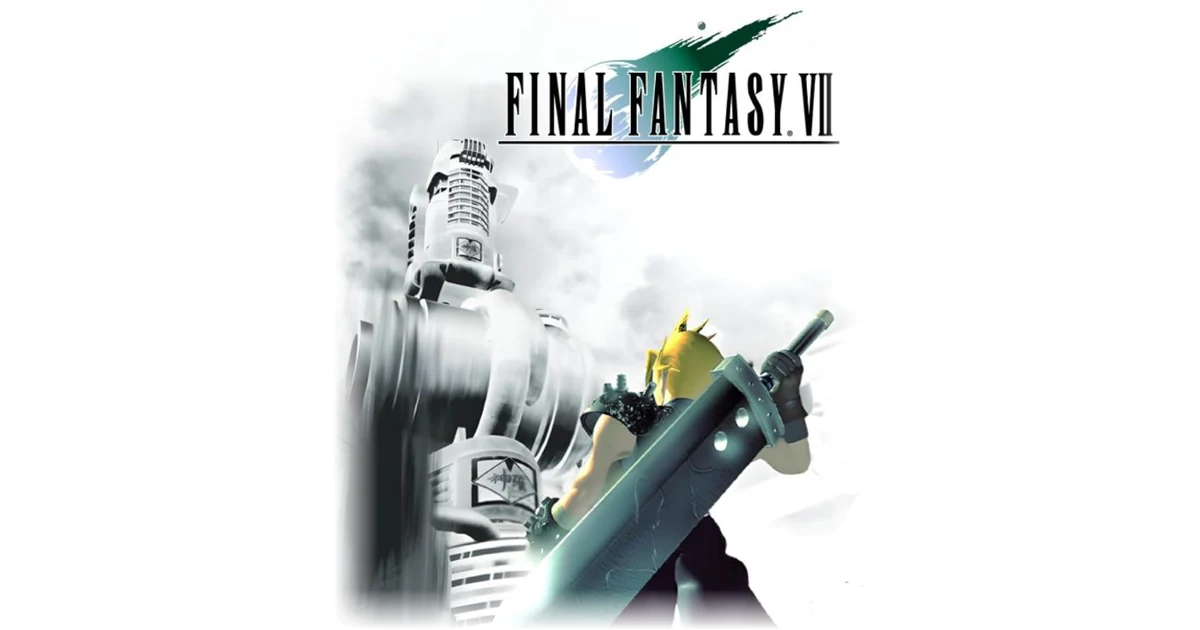
Final Fantasy VII (1997) Review: Is the Original Still Worth Playing?
Yes, if you can take its age. Originally published for the PlayStation in 1997, Final Fantasy VII still features one of the best RPG battle-customization systems ever built, music that hasn’t aged a day, and a tale that covers far more ground than any modern remake does in one game. The dated elements are the presentation: blocky field models, random battles, and a translation with uneven edges. This evaluation looks at what still works, what doesn’t, and how the original compares to the Remake trilogy.
Final Fantasy VII at a Glance
| Detail | Information |
|---|---|
| Original platform | PlayStation |
| Released | January 31, 1997 (Japan); September 7, 1997 (North America); November 17, 1997 (Europe) |
| Developer | Square |
| Publisher | Square (Japan); Sony Computer Entertainment (PlayStation, outside Japan) |
| Director / composer | Yoshinori Kitase / Nobuo Uematsu |
| Metacritic | 92 (PlayStation) |
| Play it today on | PC, PS4, Nintendo Switch, Xbox One, iOS and Android |
What Is Final Fantasy VII?
Final Fantasy VII was the first main Final Fantasy to appear on CD and the first to use 3D. It combined 3D characters with pre-rendered scenery and full-motion video cutscenes. Yoshinori Kitase directed it, and series creator Hironobu Sakaguchi produced it, with Tetsuya Nomura designing the characters.
It was also a big commercial success. The original game has sold over 15 million copies and was admitted into the World Video Game Hall of Fame in 2018, which credits it with introducing Japanese RPGs into the mainstream.
Story: Still the Game’s Biggest Strength
You play as Cloud Strife, a former soldier hired by the eco-terrorist group AVALANCHE to assault Shinra, the company draining the planet’s life essence to power the city of Midgar. The job becomes a hunt for a renowned soldier, Sephiroth, long believed dead.
The scale and the cast make the plot work. The opening hours in Midgar tell a compact, self-contained story about a corporate metropolis, and then the game widens into a huge world. Characters like Barret, Tifa, and Aerith get real arcs, while Cloud is a more complex hero than he first appears. Even after decades of spoilers, the tale holds up because it trusts the player to figure things out.
Combat and Materia: The System That Holds Up
Battles use Final Fantasy’s Active Time Battle system: each character acts when their gauge fills, so speed matters even though battles are menu-based. Limit Breaks are powerful attacks that build as a character takes damage, adding a timing layer.
But the real star is Materia. These spheres, placed in weapons and armor, provide characters with spells, summons, commands, and stat bonuses. Any party member can fill any role, since you can freely swap Materia between characters. Linked slots let you combine Materia, such as adding an “All” effect to a healing spell so it hits the whole party. It’s flexible, easy to learn, and still rewarding to play around with. It’s the main reason the fighting feels better today than the visuals look.
What Has Aged
- Visuals: the pre-rendered backgrounds can still look good, but the characters on top of them use simple, blocky polygon models outside of battle.
- Translation: the English script was criticized at release for typos and unclear lines. It’s readable, but some scenes are harder to follow than they should be.
- Random encounters: fights start at random on the world map and in many areas. They slow down exploration, especially when you’re just trying to get somewhere.
- Minigames: short story minigames break up the pace. Some are fun; others feel clumsy with today’s controls.
- Party size: only three characters can fight at once, a limit IGN called the game’s only real shortcoming in its original review.
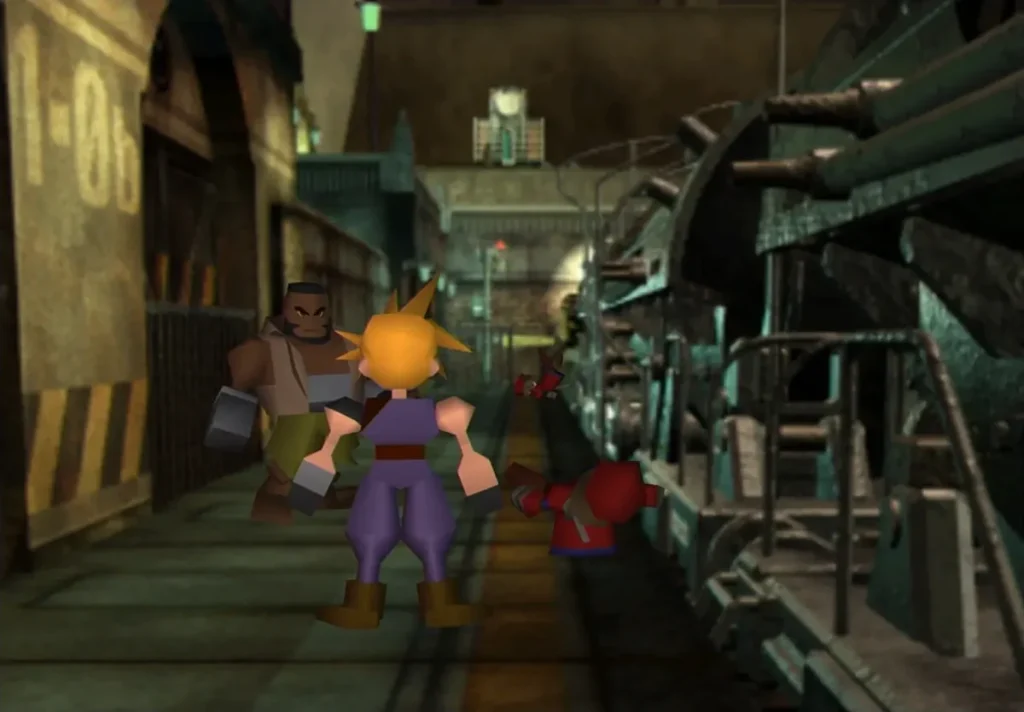
None of these break the game, but they make the first few hours harder for modern players than for 1997 audiences.
Final Fantasy VII Original vs. Remake
The biggest question for new players is whether to start with the 1997 original or the Remake trilogy.
| Original (1997) | Remake trilogy | |
|---|---|---|
| Story covered | The whole story in one game | Split across three games: Remake (2020) covers only Midgar, Rebirth followed in 2024, and Revelation is due in spring 2027 |
| Combat | Turn-based Active Time Battle | Real-time action combat with an ATB gauge for special moves |
| Encounters | Random battles | Visible enemies |
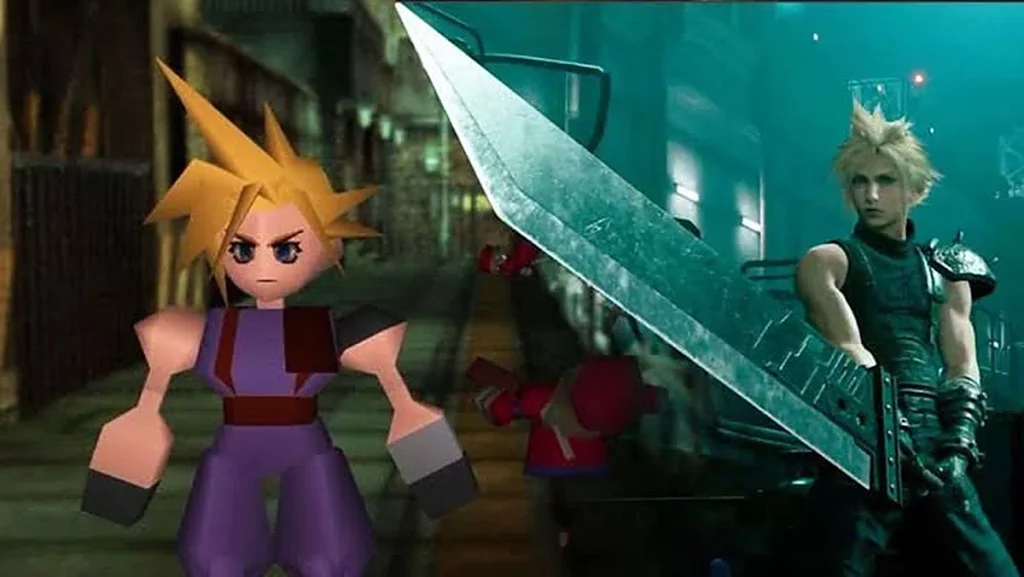
| Presentation | Pre-rendered backgrounds, blocky field models | Fully modern 3D graphics and voice acting |
| Story approach | The original version | Expands and reworks events rather than retelling them beat for beat |
If you want the full story now, prefer turn-based fighting, or want to know what the Remake trilogy responds to, play the original first. If old graphics and random battles would put you off, start with the Remake, as long as you’re happy to wait until 2027 for the ending.
One obvious benefit to playing the original first: the Remake trilogy often plays with player expectations of the 1997 plot, and some major moments hit harder if you know what it’s changing.
How to Play Final Fantasy VII Today
The original is easy to find legally. Official versions are available on PC via Steam, PlayStation 4, Nintendo Switch, Xbox One, iOS, and Android.
The Switch version also has some nice features: a 3x speed mode, the ability to turn off random encounters, and a battle enhancement mode, all mentioned on its official Nintendo eShop listing. Together, they remove most of the grind that irritates new players. This makes it one of the easiest ways in. See your platform’s shop page for what options your version offers.
If you have the original PlayStation discs, they still play on any PS1-compatible console, including the PS2 and PS3.
Final Verdict
Final Fantasy VII lives up to the hype. The Materia system remains clever, the soundtrack by Nobuo Uematsu remains superb, and the plot still rewards attentive players. What has aged is the packaging: field visuals, random battles, and patchy translation.
Play it if you like turn-based RPGs or want the complete tale before the Remake trilogy is done. If you find the grind a bit much, a version with speed-up and encounter options, like the Switch port, can help a lot. Skip it or start with the Remake if archaic 3D graphics are a dealbreaker.
For another original-vs-remake comparison, see our Ocarina of Time review, which compares the N64 original with the Switch 2 remake.